Pritilata Tripura · Heyako Branch
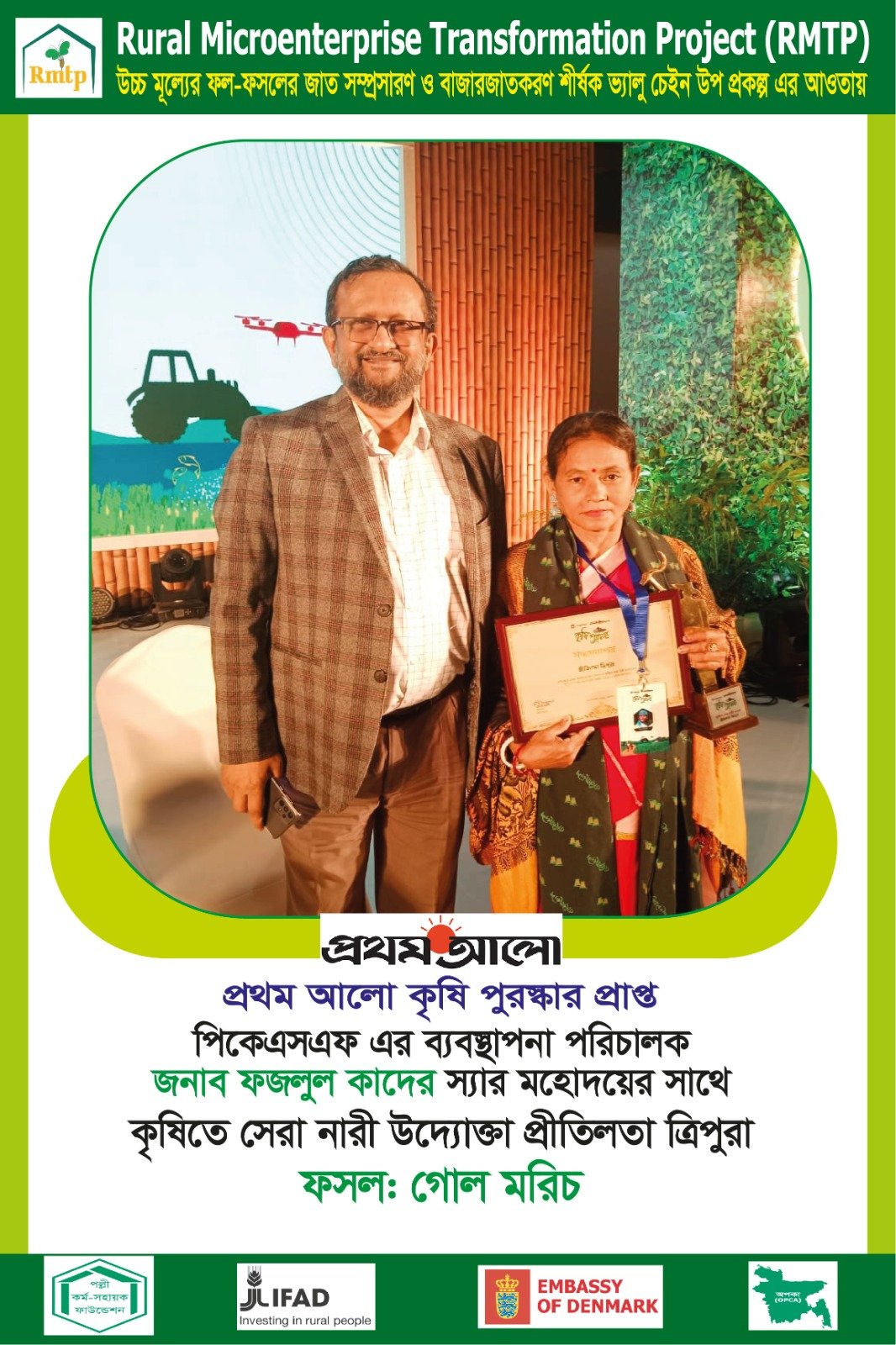
“Black Pepper, Prothom Alo, RTMP, OPCA, PKSF”— Pritilata Tripura
In the remote hilly area of Koyla Baro Para under Mirsharai Upazila of Chattogram, a remarkable transformation story is emerging among the Tripura indigenous community. Traditionally, the Tripura people depended mainly on Jhum (shifting) cultivation for their livelihoods. However, with changing times and increasing livelihood challenges, many families have started adopting diversified agricultural practices, including rice cultivation, lemon production, and spice crops, to improve their economic conditions.
Women in the Tripura community have always played an important role in agricultural activities. Pritilata Tripura is one such inspiring woman farmer who has transformed her livelihood through modern agricultural practices, particularly black pepper cultivation.
Pritilata Tripura received a two-day skills development training on modern black pepper cultivation with financial and technical support from the Organization for the Poor Community Advancement (OPCA) and the Palli Karma-Sahayak Foundation (PKSF).
After receiving the training and technical guidance from OPCA, she started black pepper cultivation in 2018 on 25 decimal (approximately 0.25 acre) of land near her home.
With dedication and regular care, she managed her black pepper garden by ensuring:
Her commitment and consistent efforts helped her establish a successful black pepper plantation in the hill area.
To improve black pepper production and address plant health issues, Pritilata received technical advice from agricultural experts, including officials from the Ramgarh Horticulture Centre, Fatikchhari Agriculture Office, and Mirsharai Agriculture Office.
Through field-level guidance and practical recommendations, local black pepper farmers received support on:
These initiatives helped farmers gain confidence in cultivating black pepper as a profitable agricultural activity.
Pritilata Tripura is not only a skilled farmer but also a working woman. She works as a field staff member of BRAC and manages her household responsibilities alongside agricultural activities.
She lives with her husband Suresh Tripura, who is also a farmer, their two daughters, one son, and her mother.
Before starting black pepper cultivation, managing household expenses and ensuring quality education for her children was a major challenge. Through her agricultural initiative, she gradually improved her family’s financial stability and created additional income opportunities.
Over the past five years of black pepper cultivation, Pritilata has successfully integrated other crops into her black pepper garden. She has cultivated companion crops such as:
By selling these agricultural products, she has earned approximately BDT 80,000.
In addition, she has produced black pepper saplings through plant cuttings and sold them to other farmers, generating an additional income of around BDT 20,000.
Her success has demonstrated that black pepper cultivation can be a sustainable livelihood option for farmers in the hill areas.
This year, Pritilata’s black pepper plants have produced a significant amount of fruit. She believes that as the plants mature, both production and income will continue to increase.
Her achievement has encouraged other farmers in the area to consider black pepper cultivation as an alternative income-generating activity.
Pritilata’s future goal is to expand her black pepper cultivation area and encourage more farmers in the hill communities to adopt this profitable and sustainable crop.
She also plans to produce black pepper saplings through cuttings and make them available to local farmers. Through this initiative, she aims to:
| Area of Impact | Achievement |
|---|---|
| Livelihood Improvement | Generated additional income through black pepper and companion crops |
| Women Empowerment | Established herself as a successful indigenous woman farmer |
| Agricultural Diversification | Introduced spice crop cultivation in the hill community |
| Community Development | Inspired other farmers to adopt black pepper farming |
| Sustainable Agriculture | Promoted climate-friendly and long-term agricultural practices |
The story of Pritilata Tripura reflects the power of knowledge, training, and determination in transforming rural livelihoods.
With support from OPCA and PKSF, she has turned a small agricultural initiative into a successful farming enterprise. Her journey from traditional farming practices to modern black pepper cultivation is an inspiring example of how indigenous women can lead sustainable development within their communities.
Pritilata’s success is not only changing her own family’s future but also encouraging many farmers in the hill areas to explore new opportunities for economic independence and sustainable agriculture.