Malati Tripura · Heyako Branch
“Black Pepper, RMTP, OPCA, PKSF, Vermi-compost”— Malati Tripura
In the remote hill community of Koyla Khamar Para village under Karerhat Union of Mirsharai Upazila, Chattogram, Malati Tripura, an indigenous woman farmer, has created a remarkable example of sustainable entrepreneurship through vermicompost production.
Like many rural households in the hill areas, Malati faced challenges related to limited income opportunities, declining soil fertility, and increasing dependency on chemical fertilizers. The decreasing quality of agricultural land affected crop production and increased farming costs. Searching for a sustainable solution, Malati explored an environmentally friendly approach that could improve both her livelihood and the health of her farmland.
Malati was introduced to vermicompost technology through OPCA’s RMTP Project. Through project support, she received knowledge about organic fertilizer production and learned how vermicompost can improve soil quality, increase crop productivity, and reduce the harmful impacts of chemical fertilizers.
The idea of producing natural fertilizer using locally available resources inspired her. She realized that vermicompost could be a practical solution for improving agricultural productivity while protecting the environment.
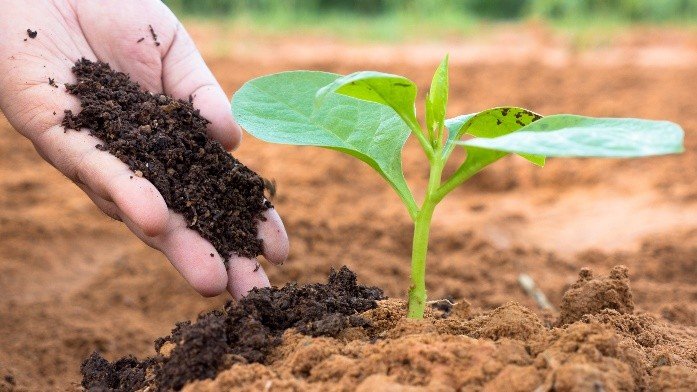
With determination and commitment, Malati started vermicompost production on a small scale near her home. She used locally available organic materials such as cow dung, dry leaves, vegetable waste, and other biodegradable resources to produce nutrient-rich compost with the help of earthworms.
At the beginning, she faced challenges in maintaining the compost beds and ensuring proper care of the earthworms. However, with continuous practice, learning, and technical guidance, she gradually developed the skills needed to produce quality vermicompost.
After around three months of effort, Malati successfully produced her first batch of vermicompost.
Malati first applied the vermicompost to her own farmland. The results were encouraging. She observed improvements in soil fertility, moisture retention, and crop quality. The success of her own farming encouraged her to increase production and share her experience with other farmers.
Seeing the positive results, many local farmers became interested in using organic fertilizer. Gradually, Malati started selling vermicompost to neighboring farmers, creating a new source of income while promoting sustainable agricultural practices in her community.
Vermicompost production has brought meaningful changes to Malati’s life. The income generated from selling organic fertilizer has helped improve her family’s financial condition and supported household needs, including children’s education and agricultural investment.
From a small home-based initiative, Malati has developed herself into a local green entrepreneur who demonstrates that sustainable agriculture can create dignified livelihood opportunities.
Malati’s achievement has encouraged other indigenous women and farmers in her community to explore similar opportunities. She actively shares her knowledge and experience with others, encouraging them to engage in organic fertilizer production.
Her initiative represents more than an income-generating activity—it reflects women’s empowerment, community participation, and collective progress. Through her efforts, more women are becoming confident in taking part in economic activities and contributing to their families’ wellbeing.
Looking ahead, Malati wants to expand her vermicompost production and reach more farmers in the surrounding areas. She hopes to receive advanced training and improved equipment to increase production capacity and promote organic farming practices more widely.
Her dream is to establish vermicompost production as a sustainable agricultural solution for farmers in the hill regions.
The journey of Malati Tripura demonstrates how knowledge, determination, and appropriate support can transform challenges into opportunities.
Her vermicompost initiative is not only improving her own livelihood but also contributing to environmental conservation and sustainable agriculture in her community.
Supported by OPCA’s RMTP Project, Malati has become an example of how rural and indigenous women can lead positive change through innovation, resilience, and sustainable practices.